When someone you love is preparing to move into assisted living, the practical details can quickly take over. There are forms to complete, appointments to coordinate, and decisions to make. But just as important as the logistics is the emotional side of the transition.
A move into assisted living is not simply a change of address. It is a major life moment. For many families, the goal is not only safety and support, but also helping a loved one feel comfortable, respected, and at home.
Care feels best when people feel known.
– Dr. Mark Cacciamani
Start with familiarity
One of the simplest ways to make a new space feel more comfortable is to bring familiar items into it from the beginning. These details may seem small, but they can have a powerful effect.
Items that often help include:
- framed family photos
- a favorite chair or blanket
- familiar bedding
- books, devotional materials, or puzzles
- a lamp or decorative object from home
- meaningful artwork or keepsakes
A thoughtfully arranged room can help someone feel grounded during a time of change.
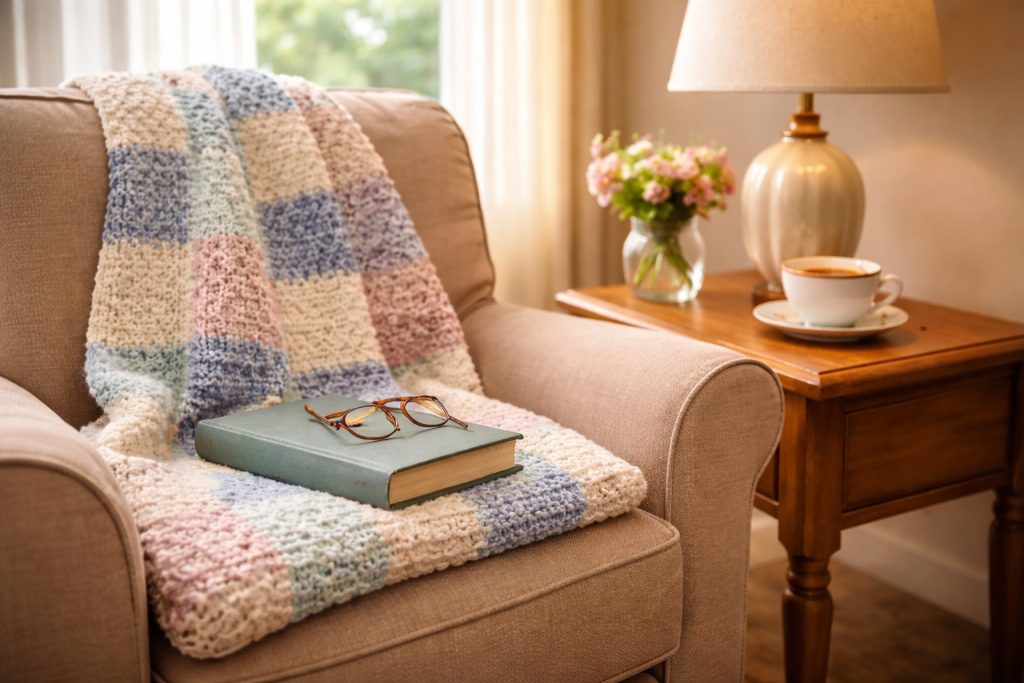
Comfort often begins with familiarity. A new environment feels less overwhelming when it includes the objects, routines, and personal touches that already feel like home.
Focus on routine, not just the move
Families often spend most of their energy preparing for move-in day. That matters, but the days that follow are just as important.
Try to think about what helps your loved one feel steady in everyday life. That may include:
- what time they usually wake up
- how they like to start the day
- favorite foods or snacks
- preferred quiet times
- regular calls or visits from family
- hobbies, music, or television programs they enjoy
The more a new daily rhythm reflects the person’s existing preferences, the easier the transition can feel.
What families can do in the first few weeks
The first few weeks are often an adjustment period for everyone involved. It can help to focus less on “making everything perfect” and more on being present and observant.
Here are a few practical ways families can help:
- Give it some time.
A transition can take longer than families expect. Early emotions do not always reflect how someone will feel once they settle in. - Visit consistently, but calmly.
Short, reassuring visits can feel more supportive than long, emotionally intense ones. - Ask open-ended questions.
Instead of asking only “Are you okay?” try asking “What is feeling easiest so far?” or “What would help this room feel more like yours?” - Communicate with the team.
Share useful details about routines, preferences, and personality. The little things often matter.
Personal connection matters
A supportive assisted living experience is not only about services. It is also about how a person is treated day to day. Feeling known by name, having preferences remembered, and being welcomed into a community can make a real difference.
At Manor on 1st, we believe the best transitions happen when care feels personal. A warm setting, thoughtful communication, and attention to individual comfort all help residents and families feel more supported through change.
A few questions families can ask
When evaluating any assisted living community, these questions can help guide the conversation:
- How do you help new residents settle in?
- How do you learn a resident’s routines and preferences?
- How do you communicate with family during the first few weeks?
- What can families bring to help personalize a suite?
- How do you support both independence and day-to-day care?
You can also learn more by exploring our About Us page or reaching out through our Contact page.
What to bring right away
- medications and required paperwork
- a few favorite personal items
- comfortable clothing
- important phone numbers
- daily essentials
What can wait
- extra décor
- additional clothing
- non-essential storage items
- seasonal items
- duplicate household goods
A final thought
Transitions are rarely easy, but they can be made gentler. With preparation, communication, and personal touches, assisted living can begin to feel less like a disruption and more like the start of a supportive new chapter.
Choosing the right assisted living in downtown Salt Lake City is one of the most important decisions a family can make. It is also one of the most emotional.
Most families start with obvious questions. Is it safe? Is the location convenient? What does it cost? What services are included? Those questions matter, but they are not enough. If you are trying to find the right fit for someone you love, you need to look deeper.
When touring assisted living in Salt Lake City, pay close attention to the feel of the community. Does it feel warm and welcoming, or does it feel rushed and impersonal? Are residents engaged? Do team members seem attentive? Do people greet one another by name? These details matter because they often tell you more than a polished brochure ever will.
A strong community should offer more than care on paper. It should provide peace of mind.
Families should also look closely at communication. One of the biggest frustrations people have in senior living is poor communication. When families feel left in the dark, trust breaks down fast. A quality family-first assisted living community should make communication feel natural, respectful, and consistent.
Another major factor is size. Bigger is not always better. In many cases, a small assisted living community in Salt Lake City can provide a more personal experience. Smaller settings often allow staff to know residents more closely, notice changes more quickly, and build stronger day-to-day relationships with both residents and families.
That is part of what makes the boutique model so appealing.
At Manor on 1st, we believe assisted living should feel personal, supportive, and rooted in dignity. As a boutique assisted living community in downtown Salt Lake City, Utah, we are intentionally creating an environment where residents are known, families are valued, and care is approached with heart.
You should also consider whether the community feels like home. This is not a small issue. Environment has a direct impact on comfort, confidence, and quality of life. A resident should not feel like they have simply been placed somewhere. They should feel welcomed into a community.
When comparing senior care in Salt Lake City, ask yourself the hard question: would I trust this place with someone I love? If the answer is not a clear yes, keep looking.
The right assisted living community should offer more than services. It should offer trust, connection, and a sense of belonging.
If you are exploring assisted living in Salt Lake City, Utah, Manor on 1st is being built around those values—small, boutique, family-first, and thoughtfully located in the heart of downtown.
When families begin searching for assisted living in Salt Lake City, Utah, they often start with the basics: location, safety, care, meals, and cost. Those things matter. But one factor that is often overlooked at first—and deeply felt later—is the size of the community.
At Manor on 1st, we believe there is real value in being a small, boutique assisted living community in downtown Salt Lake City. Smaller communities often create a more personal experience for residents and their families. That is not marketing language. That is reality.
In a large senior living setting, it can be easy for residents to feel like one more apartment number. In a smaller community, relationships tend to be stronger. Team members can get to know residents by name, learn their daily routines, notice changes more quickly, and understand the preferences that make someone feel comfortable and at home.
That is one reason so many families are drawn to boutique assisted living in Salt Lake City.
A smaller environment can also feel less overwhelming during a major life transition. Moving into assisted living is emotional. Families are often balancing concern, guilt, urgency, and uncertainty all at once. Residents may feel anxious about change, independence, or leaving a longtime home. A community should not make that harder. It should make it easier.
At Manor on 1st, we are building a family-first assisted living community that values warmth, dignity, and meaningful connection. We want our residents to feel known. We want families to feel welcome. We want care to feel personal rather than transactional.
Our location in downtown Salt Lake City, Utah adds another advantage. Families have the convenience of a central location, while residents have the benefit of a thoughtfully designed community that blends comfort, support, and charm. For those looking for senior living in Salt Lake City with a more intimate setting, a boutique model can offer a strong alternative to larger communities.
Personal care is not just about completing tasks. It is about how people are treated every day. It is about being greeted warmly, feeling recognized, and living in a place where support is available without losing a sense of identity.
That is what smaller communities often do best.
If you are exploring assisted living in downtown Salt Lake City, Manor on 1st offers a distinctive approach—one rooted in personal connection, thoughtful care, and a setting designed to feel like home.